
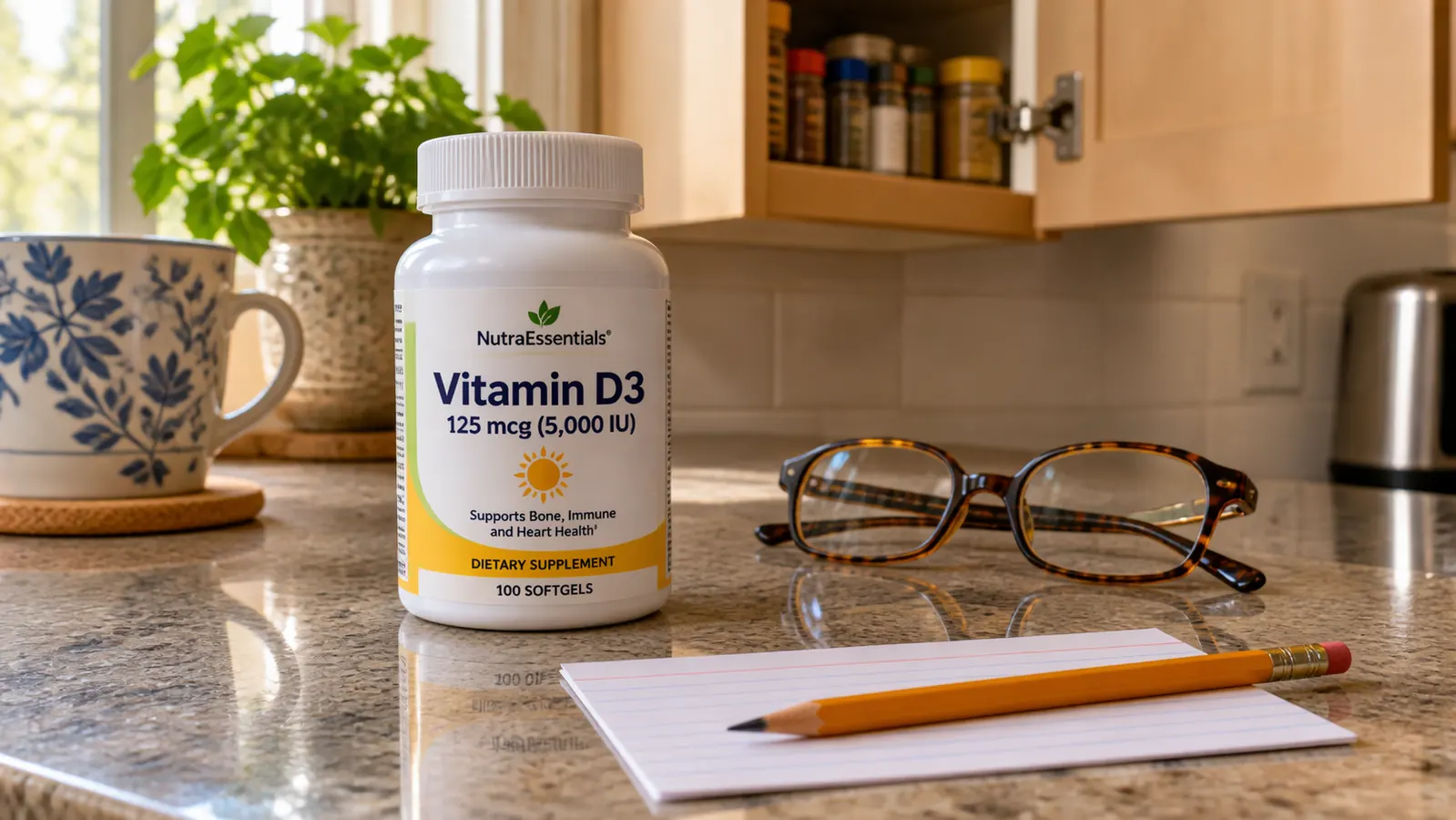
I have been taking NatureWise Vitamin D3 for thirty months. I am on my third bottle. And here is the honest, unglamorous truth about it: I cannot tell you I feel a difference, and I would not trust anyone who says they can.
What I can tell you is what the label says, what the softgel looks like in the cap, what happens to a 360 count bottle after a year in an Ohio kitchen, and why the number on the front of this bottle is the single most important thing to slow down and read. My doctor picked this one for me. That last sentence is doing a lot of work, and it is the reason this review reads differently from most of what you will find about NatureWise online.
The Quick Verdict
A small, easy-to-swallow softgel with a clean label and a year of supply per bottle. The catch is that 5000 IU is a strong amount, so this is a bottle to start with your doctor rather than on your own.
Amazon Check Today's Price →One small softgel, 360 of them, about a year of mornings
This is the bottle I keep in the cabinet left of my sink. If your doctor has already told you a daily D3 is right for you, here is the listing with the full label detail.
Amazon See the NatureWise D3 label on Amazon →How I Ended Up With This Bottle
Thirty months ago I had my yearly physical. My doctor looked at my chart, checked a few things, and suggested a daily vitamin D3. She named the amount. I wrote it on the index card I keep in the cabinet, in pencil, and I went to the store with that card in my purse.
That is the whole origin story. No symptoms sent me looking. No article scared me into it. No friend recommended a brand. My doctor said a number, I wrote the number down, and I went and found a bottle that matched it.
I want to be plain about that because the internet is full of vitamin D3 writing that reads like a warning label on fire. I am not going to do that to you. I am sixty-three, I retired after thirty-one years as a middle school librarian, and I read labels the way I used to read reference books. Slowly. With a pencil. What follows is what thirty months of that actually produced.
What the Label Actually Says, Line by Line
The front of the bottle gives you the number first. 5000 IU. Under it, in smaller type, 125 mcg per softgel. Those are the same amount said two ways, and I had to look that up because I did not know it.
The directions are where I want your attention. The listing says do not exceed one softgel daily. That is one small softgel. Not two because you missed a day, not two because you are a large person, not two because somebody on a forum takes two. One.
The ingredient list is short, and I appreciate that. Vitamin D3, and organic cold-pressed olive oil that the maker says is not processed with heat or hexanes. I cannot verify a manufacturing process from my kitchen table. What I can tell you is that the ingredient list does not have a paragraph of things I cannot pronounce, and for a bottle I open every single morning, that matters to me more than any claim on the front.
The bottle also carries the standard asterisked statement about supporting immune function and bones. Read the fine print under it. That asterisk says the FDA has not evaluated the statement, and that the product is not intended to diagnose, treat, cure or prevent any disease. Those are the label's own words about its own claims. I think every person standing in a vitamin aisle should read that line once, slowly, and then reread it.
Nothing on this label tells me what I will feel. It tells me what is in the softgel, how much, and what the maker is allowed to say. That is all any label can do. My doctor is the one who knows my chart.
Nothing on this label tells me what I will feel. It tells me what is in the softgel, how much, and what the maker is allowed to say. My doctor is the one who knows my chart.
The Softgel Itself: Size, Smell, and the Sticky Problem
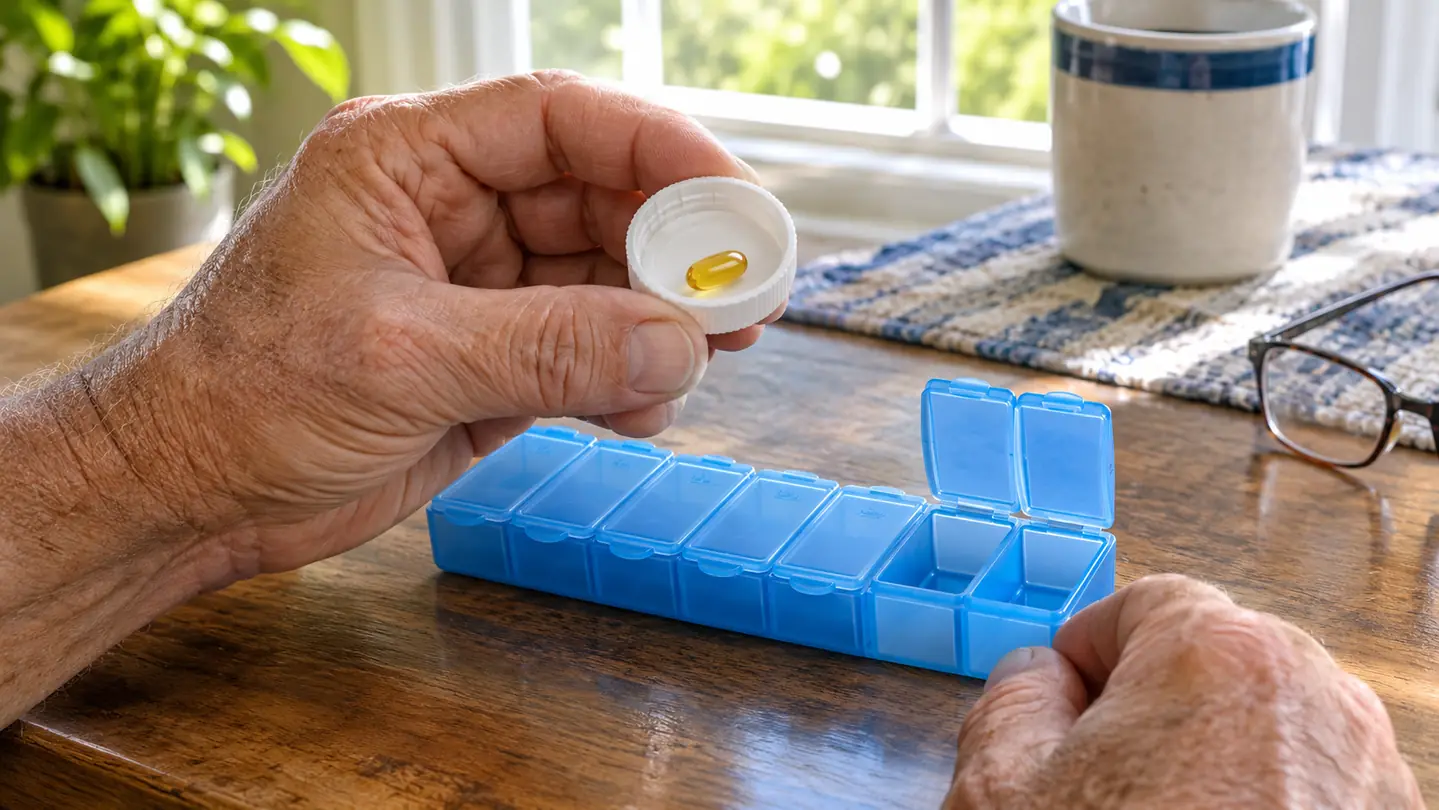
The softgel is genuinely small. I have arthritis in my right hand and I can still tip one out of the cap without chasing it around the counter. It is unflavored, which is accurate. There is no fishy taste because there is nothing fishy in it, and no aftertaste I have ever noticed. It goes down with a swallow of water at breakfast.
Now the part the listing mentions and most reviews skip. Softgels can get sticky and clump together in a warm place. That is not a defect and it is not a bad batch. It is what the things do. My kitchen gets warm in July, and one summer I opened the bottle and found a cluster of them stuck together at the bottom like a small frozen pea pile.
I did not throw the bottle out. I moved it to a cooler spot and knocked the cluster loose with the handle of a butter knife. But I did learn something, and it is the most practical thing in this whole review: keep the bottle somewhere genuinely cool, and do not store it above the stove or beside the dishwasher. My cabinet left of the sink has been fine. The summer it sat near the oven was the summer they clumped.
Three Bottles Later: What I Actually Like
The count is the big one. Three hundred sixty softgels at one a day is roughly a year in a single bottle. I am on my third, and I have not once had to think about whether I was running low before a Tuesday morning. For a person who fills a blue seven day pill box every Sunday evening at the kitchen table, having the supply sorted for twelve months at a stretch removes a small but real piece of weekly friction.
The bottle dimensions matter more than you would think. It is about 2.88 by 2.88 by 5.38 inches and weighs 1.6 ounces, which means it fits in my cabinet without shoving anything aside. I have a small kitchen. My vitamin C comes in a jar that takes up twice the room. This bottle does not.
The cap is a plain screw cap, tight enough that I have never had one loosen in the cabinet, and easy enough that I can open it with hands that are not what they were at forty. I know that sounds like a small thing to praise. It is a small thing. But a bottle you open three hundred sixty times a year earns that kind of note.
And the vegetarian capsule issue does not apply here, because this is a softgel, not a veg capsule. If that distinction matters to you, it is worth knowing before you order rather than after. The listing also states it is gluten free and unflavored, and it is manufactured in the USA in a facility the maker says follows cGMP and undergoes independent third party audits. That is the maker's statement. I can only report that the bottle arrived sealed and intact every time.
What I Liked
- One small softgel a day, easy to handle even with hands that are not what they used to be
- 360 count means roughly a year of supply, so no monthly reordering to remember
- Short ingredient list: vitamin D3 in organic cold-pressed olive oil, with no long paragraph of additives
- The bottle is about 2.88 by 2.88 by 5.38 inches, so it fits a small cabinet without rearranging anything
- Unflavored and gluten free, with no aftertaste I have ever noticed
Where It Falls Short
- 5000 IU is a strong amount and not a number to pick for yourself
- Softgels clump in a warm kitchen, which the listing mentions and which happened to me one summer
- A 360 count is a lot of bottle to be holding if your doctor ever changes the amount
- It is a softgel, not a vegetarian capsule, so it is out for some people on that alone
What Nobody Tells You Before You Buy the 360 Count
Here is the tradeoff, and it is a real one. Three hundred sixty softgels is a wonderful value if the amount never changes. It is a nuisance if it does.
My doctor rechecks my vitamin D at my yearly physical. If she ever decided the amount should be different, I would be sitting on the better part of a year of softgels at the old amount, and I would have to decide what to do with them. That is not a reason to avoid this bottle. It is a reason to understand what you are committing to before the box arrives.
The other thing nobody says out loud: this is a strong softgel. 5000 IU is not a number to pick for yourself because it sounded good on a podcast, and it is not a number to copy from me. My doctor chose it for my chart after a physical. She is the one who rechecks it. I am not a doctor, I am not a nutritionist, and I am not going to tell you what amount to take. I am telling you that I do not choose mine, and that is on purpose.
I will also say this plainly, because I think it is the most useful sentence in this review. If you are on any prescription, if you are pregnant, or if you have a health condition, talk to your own doctor or pharmacist before you add any bottle to your day. The pharmacist at my grocery store is the person I ask when I have a question between physicals. He is free, he is patient, and he has never once made me feel foolish for asking.
Read the label before you decide, not after
The full ingredient list, the amount per softgel, and the do-not-exceed line are all on the listing. Take that page to your next appointment if you are unsure.
Amazon Check the full NatureWise label on Amazon →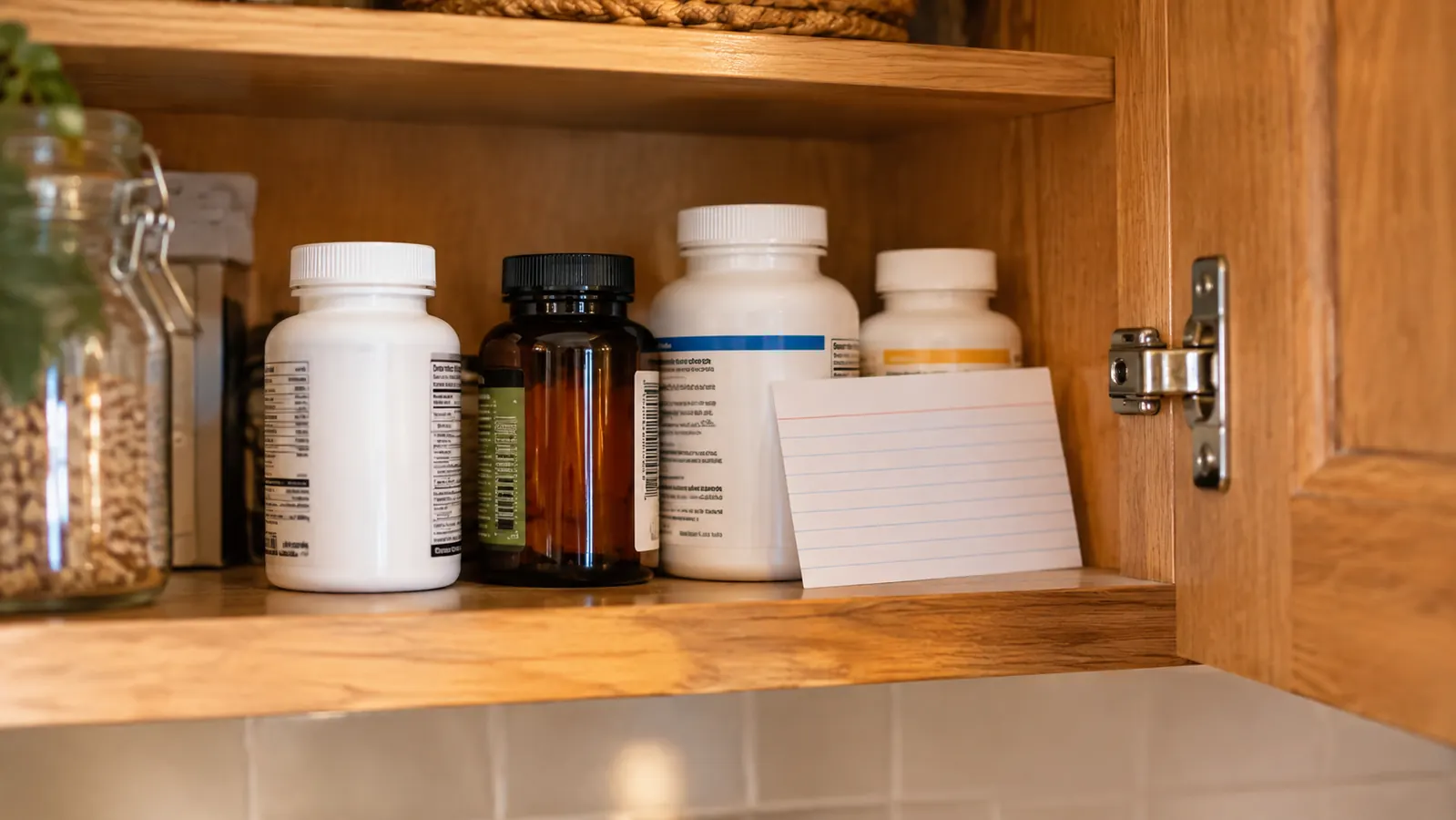
How It Fits a Real Morning
About eight in the morning, with food and water, I take four things. The multivitamin, this softgel, the B-100, and the vitamin C. The magnesium is a dinner thing and it stays away from the multivitamin, on my pharmacist's suggestion, because the multivitamin has iron in it.
The D3 is the easiest of the four. It is the smallest, it has no smell, and it does not need to be counted. One softgel in the cap, into the hand, into the mouth, water. That is it.
I keep one index card in the cabinet and I write what I take on it in pencil. I took that card to my doctor at my yearly physical and she has seen all of it, this bottle included. I mention that because it is the single habit I would hand to anyone reading this. Not the brand. The card. Write it down, take it in, let your doctor look at the whole picture at once, because the whole picture is what matters and no single bottle is.
The Drops Question
I know people who use liquid vitamin D3 drops and swear by them. I have never owned a bottle. I have stood in the aisle and read the label on one, though, and I put it back for two honest reasons that have nothing to do with whether drops work.
First, counting drops with reading glasses on, at eight in the morning, before coffee, is not something I trust myself to do accurately day after day. Second, and this is the practical one, drops do not go in a pill box. My whole routine depends on the box. Sunday evening, the kitchen table, lids up, seven days of little compartments with AM on one side and PM on the other, and everything I take for the week lands in it in one sitting. A liquid cannot join that.
So the softgel wins for me, and it wins on convenience and labeling, not on anything my body has told me. I want to be careful there. I have no way to compare how two forms of the same vitamin behave in a person. I only know which one I will actually take every morning without thinking, and that is the one in the bottle.
Who This Is For
This bottle suits a person whose doctor has already told them a daily vitamin D3 is right for them and has named an amount that matches this softgel. It suits someone who wants a small pill, a plain ingredient list, a supply that lasts a year, and a bottle that fits in a modest cabinet.
It also suits a person who likes the idea of a pencil and an index card. Someone who writes down what they take and brings it to appointments. If that sounds like you, you will get along with this bottle fine.
Who Should Skip It
Skip it if you have not asked your doctor about vitamin D at all. The amount in this bottle is not a starting point to guess at. Skip it if your doctor has named a different amount, because a year of the wrong number is a cabinet full of the wrong number.
Skip it if you know you cannot keep a softgel somewhere cool, or if you have had trouble with softgels clumping before and found it more irritating than I did. And skip it if you are the kind of person who wants to adjust your own amounts week to week. This is a twelve month commitment to one number, and it only works if that number is settled.
The Honest Summary
Thirty months, three bottles, one small softgel most mornings, and one forgotten morning somewhere in there that I did not bother to write down. That is the whole of my experience with NatureWise Vitamin D3, and I am not going to dress it up with a story about how everything changed, because nothing changed that I could point to.
What I can point to is a label I have read carefully, an ingredient list I am comfortable with, a softgel I can still handle at sixty-three, a bottle that lasts a year, and a number on the front that my doctor chose rather than me. The sticky-softgel summer is the only complaint I have, and a cooler shelf solved it.
If that is the kind of review you were looking for, plain and unsensational, then you have it. Ask your own doctor or pharmacist first. Take the card with you. And read the asterisk before you read the promise.
The bottle on my index card, if your doctor agrees with the number
360 mini softgels, unflavored, gluten free, one a day. Read the full label, then take that page to your next appointment and let your own doctor decide.
Amazon See today's price for NatureWise D3 on Amazon →