
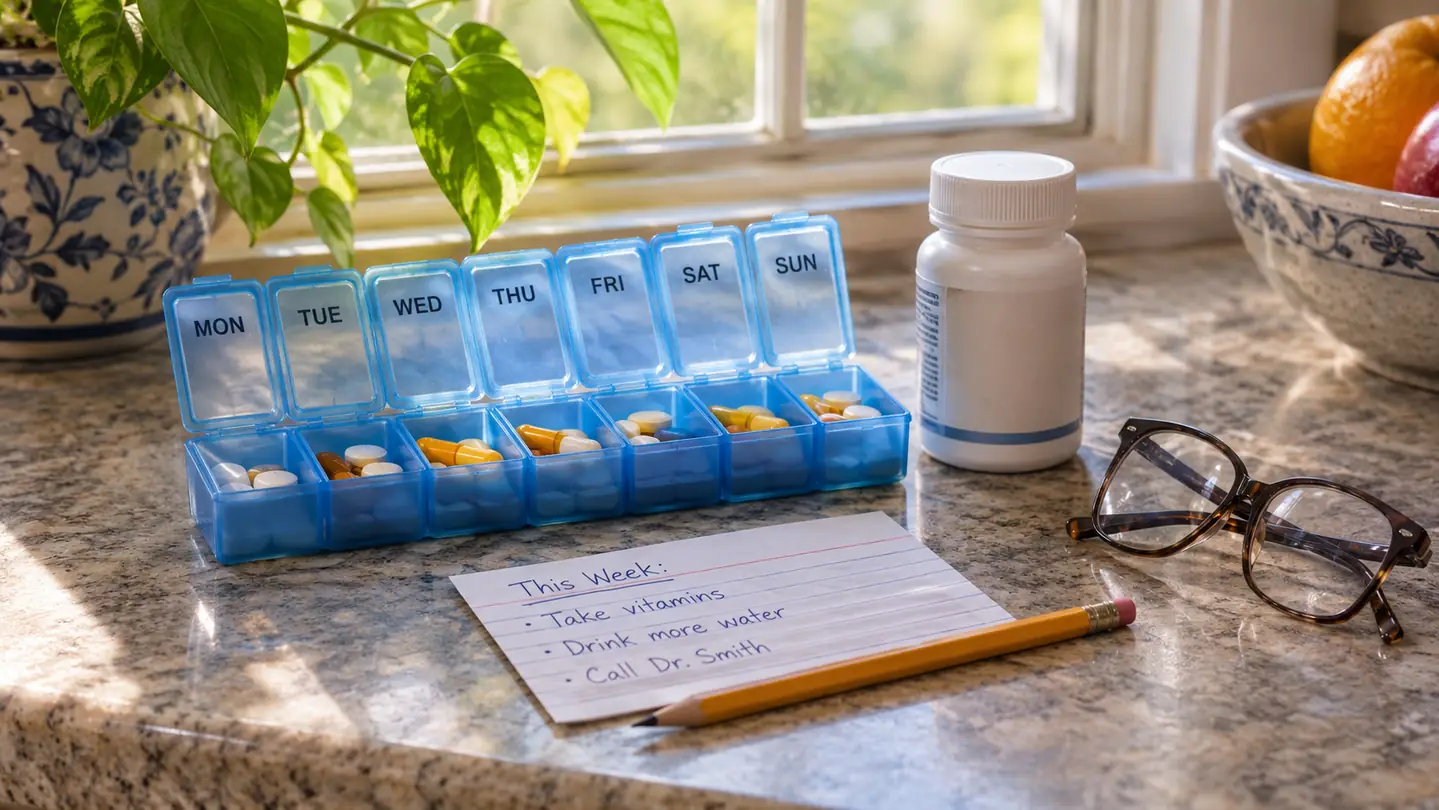
I keep a blue plastic pill box with seven lids and a 3 by 5 index card tucked inside the cabinet door to the left of my kitchen sink. The card has five lines on it. The second line reads NatureWise D3, one at breakfast. I wrote that line in pencil two and a half years ago and I have never had a reason to erase it.
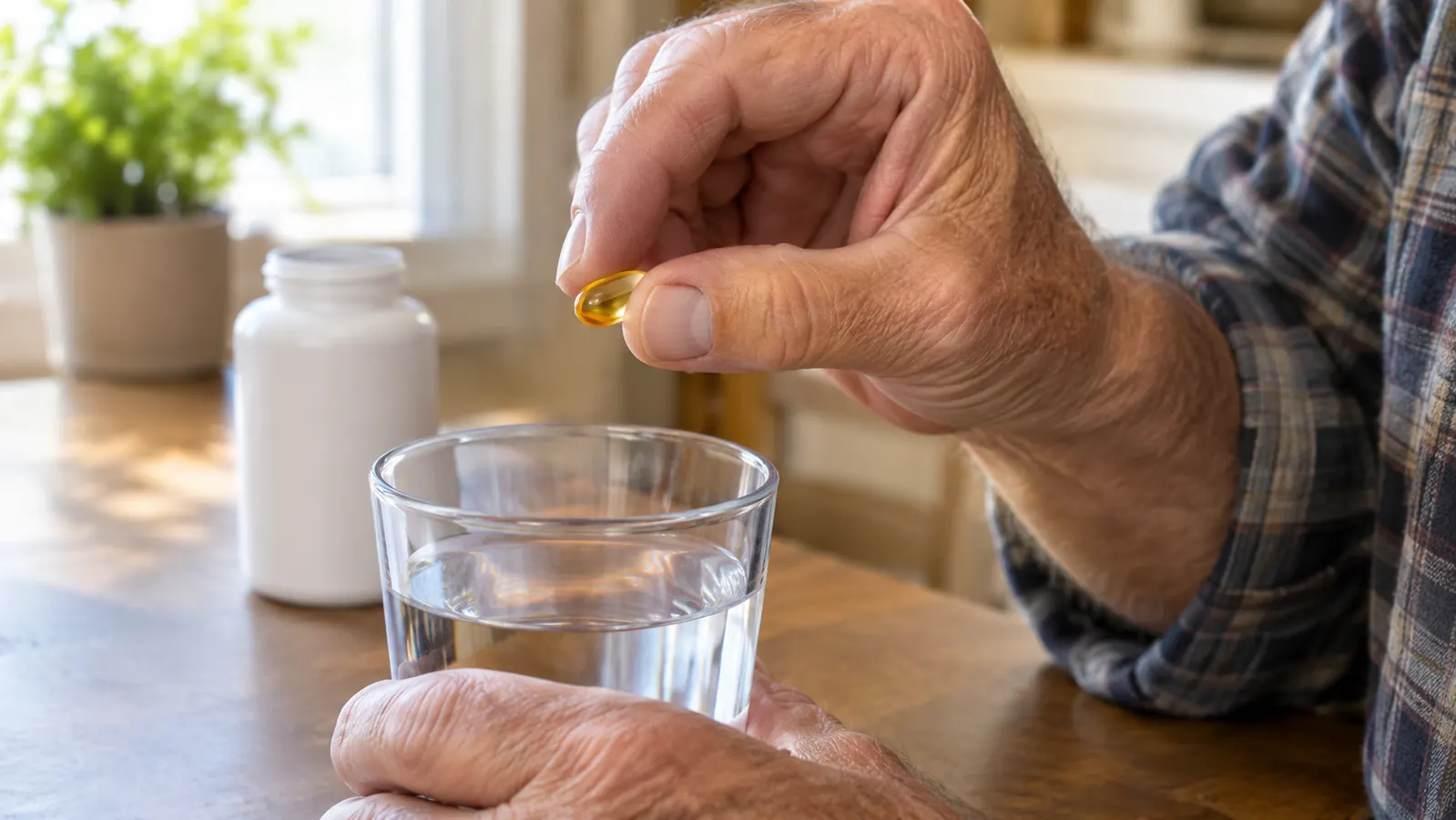
I am 63, retired three years now after 31 years as a middle school librarian in Dayton, Ohio, and I read a vitamin label the way I used to read a reference book. Slowly. With a pencil. That is how I ended up with NatureWise Vitamin D3 5000 IU, 360 mini softgels in a bottle. My doctor raised it, not me. At my yearly physical she looked at my bloodwork and suggested a daily vitamin D3. She chose the amount. I chose the bottle. I have taken one mini softgel with breakfast and a glass of water every morning since.
The Quick Verdict
A small unflavored softgel with a plain label and a bottle that lasts about a year. One honest complaint: softgels clump in warm weather, and the listing says so.
Amazon Check Today's Price →One mini softgel with breakfast, and the bottle lasts about a year
NatureWise Vitamin D3 5000 IU, 360 mini softgels, unflavored and gluten free, in a bottle small enough to forget on a cabinet shelf. My doctor picked the amount. Ask yours before you pick it for yourself.
Amazon Check Today's Price on Amazon →How I've Used It
The routine is the least interesting part, which is exactly why it has held. I fill the blue box every Sunday evening at the kitchen table. The D3 goes in the AM lid with the multivitamin, the B-100 and the vitamin C. At breakfast I take them with food and water, and there is nothing to write down, because the card in the cabinet has not changed.
One mini softgel. That is the whole serving. The listing says not to exceed one softgel daily and I have never wanted to. 5000 IU is a strong softgel. My doctor picked that number for me and she rechecks it at my yearly physical. It is not a number I would have picked off a shelf on my own, and it is not a number I would hand to anyone else. Ask your own doctor or pharmacist first, especially if you take a prescription, are pregnant, or have a health condition.
I bought the first bottle 30 months ago, in the same week my doctor wrote vitamin D on the summary sheet they hand you at the front desk. I paid for it myself, the way I pay for everything on that card. No gift, no sample, no shelf talker. That matters to me when I read a review, because a person who got a bottle for nothing is not telling me what I want to know.
A bottle lasts me about a year. I am on my third. When I open a new one the old bottle goes in the recycling and I do not think about D3 again until the softgels start rattling thin against the bottom, somewhere around month eleven. The bottle measures 2.88 by 2.88 by 5.38 inches and weighs 1.59 ounces, and it stands on the shelf with room to spare beside the multivitamin, which is the taller bottle.
In thirty months I have missed a morning the way anyone misses a morning. I forgot, or I was out the door early for the library's used book sale, and I took it when I got home. I have never stopped it, never swapped it, and never skipped a stretch of days.
What the Label Actually Says
This is the part I read with my glasses on. The front of the bottle says Vitamin D3 5000 IU, and the supplement facts panel says 125 mcg per softgel. The form is a softgel, unflavored, and the label says gluten free. The ingredients include organic, cold-pressed olive oil, which the listing says is pressed without heat or hexanes. I cannot verify any of that from my kitchen table. I can tell you it is printed there, and that the oil is why the softgel is a soft little bead rather than a dry tablet.
I read the back twice, once standing in the aisle and once at the kitchen table with the pencil. That habit has caught things for me before: a serving that turned out to be two tablets, a sugar line I did not want, a chewable that would not sit in a lid. This label survived both readings.
The label also carries the words the maker uses for what the vitamin is for. On the listing they read immune, mood, bone and muscle support, with an asterisk after them. That asterisk is the part I want you to notice. It means the FDA has not evaluated that statement, and the product is not intended to diagnose, treat, cure or prevent any disease. I am not a doctor and I am not going to tell you what a bottle will do for you. I take it because my doctor suggested it and because the label is plain enough to read without guessing.
One thing my pencil caught: my multivitamin already contains some vitamin D, along with vitamin C and a few B vitamins. I wrote that on the card, showed it to my doctor at my physical, and she was fine with it for me. Fine for me is not fine for everyone. That was a decision made in one exam room about one 63-year-old woman, and I would not copy it.
Two other lines are printed on the back, a lot number and a line about where it is made. The listing says the supplement is manufactured in the USA in a facility that follows cGMP and undergoes independent third-party audits. I have no way to audit an audit. I can say that on the bottle in my hand, that line is there.
The Softgel Itself: Small, Unflavored, a Little Sticky in July
The softgel is genuinely mini. I wear reading glasses for everything and I have never needed them to see one. It goes down with a swallow of water and no chewing, and there is no flavor to it, which is more than I can say for the gummy multivitamin I finished years ago and never bought again.
The honest complaint is clumping. Softgels get sticky when they are warm, and the listing itself says so, which I appreciated. I keep the bottle in the cabinet, door closed, away from the stove, and I have still had two softgels come out joined at the seam on a humid week in August. They separated with a thumbnail. It is an annoyance, not a defect, and I would rather know about it going in than find out.
There is no smell when the cap comes off. That sounds like nothing until you have opened a B vitamin bottle two shelves over. I take these with water and nothing else, and a softgel that tasted of anything would have me reaching for juice at 8am, which is a habit I do not want to start at 63.
The 360 count cuts both ways. One softgel a day means a bottle lasts about a year, which is why I have only bought three. It also means that if my doctor changes the amount at a physical, I am looking at a very long time with a bottle that no longer matches the card. That has not happened to me. I know it could.
The Drops I Looked At and Did Not Buy
There is a liquid vitamin D3 on the same shelf at my grocery store, in a small bottle with a dropper. I have never owned it and I have never taken it, so I will not pretend to review it. I picked it up, turned it around, and read the back the same way I read everything else.
What I saw was a serving measured in drops. Counting drops into a glass of water at 8am with my reading glasses on and a cat trying to get up onto the counter is not a routine I trust myself to keep. Drops also cannot go into a seven day pill box with lids. The softgel can. That is the whole of my reasoning, and it is a convenience argument, not a medical one. If you already like drops, or your doctor has you on a liquid for a reason, the drops are not worse. They just do not fit my card.
I wrote the longer comparison of the two on this site, and it comes down to the same thing it comes down to at my kitchen table: count drops every morning, or swallow one small softgel and close the cabinet. At 63 I know which one I will still be doing in a year.

Keeping It Honest: What I Can and Cannot Tell You
Here is the sentence I would want from anyone reviewing a vitamin. I cannot tell you I feel a difference from any one bottle, and I would not trust a person who says they can. I take four things at breakfast and one at dinner, and I could not point at any of them and name a sensation. What I can judge is the label, the size of the pill, the smell when the cap comes off, whether the bottle fits on the shelf, and whether I actually keep taking it. That is a shorter list than most reviews offer. It is the honest one.
What I can also judge is a bottle. This one is small enough that I have misplaced it behind the tea tin twice, and the softgels do not announce themselves when the cap comes off. The unflavored part matters more than it sounds, because flavor is the thing that makes me stop taking something.
Thirty months is long enough to know the routine holds and short enough that I still check the card every few months to make sure the pencil line matches the bottle in the cabinet. It does. Dewey, my gray tabby, has never shown the slightest interest in that cabinet, which is fortunate, because everything in there stays behind a closed door. Vitamins are for people. Cats get their own food and their own vet, and neither of those is on my card.
One last piece of housekeeping, and then the list. I am not a nutritionist, a pharmacist or a doctor. I am a retired librarian with a pill box, a pencil and a yearly physical. Everything below is what I noticed with my own eyes in my own kitchen. Anything about your body belongs to you and your doctor.
What I Liked
- Mini softgel that goes down with water, unflavored, no aftertaste
- 360 count at one a day lasts about a year, so it is not a monthly errand
- Label states the form, the amount and the olive oil plainly
- Gluten free and unflavored, which keeps 8am simple
- Small bottle that fits a cabinet shelf beside taller bottles
Where It Falls Short
- Softgels clump in warm, humid weather, which the listing itself mentions
- 5000 IU is a strong amount and not a number to choose for yourself
- 360 is a long commitment if your doctor changes the amount
- Nothing on the bottle can tell you whether it is working, because no bottle can
I cannot tell you I feel a difference from any one bottle, and I would not trust anyone who says they can. What I can tell you is that a 360 count lasted me about a year, three times running.
Who This Is For
This is for someone whose doctor has already suggested a daily vitamin D3 and who wants a small, plain softgel that goes down with water and needs no counting, measuring or mixing. It suits a pill box. It suits a person who fills that box on Sunday evening and does not want to think about it again until the next Sunday. The 360 count suits anyone who expects to stay on the same amount for a long stretch.
It also suits a reader who likes a label they can read without a magnifier. The front is simple, the form is stated, the amount is stated, and the oil is named. If you are the sort who keeps a pencil in the kitchen and writes things down, this is a bottle that rewards the habit.
Who Should Skip It
Skip it if nobody has told you what amount to take. 5000 IU is a strong softgel, and picking a number off a shelf because a stranger on a review page takes it is a poor way to choose. Ask your own doctor or pharmacist first, especially if you take a prescription, are pregnant, or have a health condition. If your multivitamin already carries vitamin D, bring both labels and let someone who knows your history look at them together.
Skip it if you need a liquid, if you have been told to take a different amount, or if 360 softgels in one go feels like a commitment you are not ready to make. Skip it if your vitamins live in a warm kitchen drawer you cannot move, since softgels clump. And if you want a bottle that promises you something, this is not that bottle. It is a bottle with a number on it, and the number came from my doctor, not from the front label.
The card in my cabinet has said the same thing for two and a half years
Third bottle, same line in pencil, one mini softgel at breakfast. If your doctor has already told you a daily D3 is right for you, this is the bottle I keep buying for myself.
Amazon Check Today's Price on Amazon →